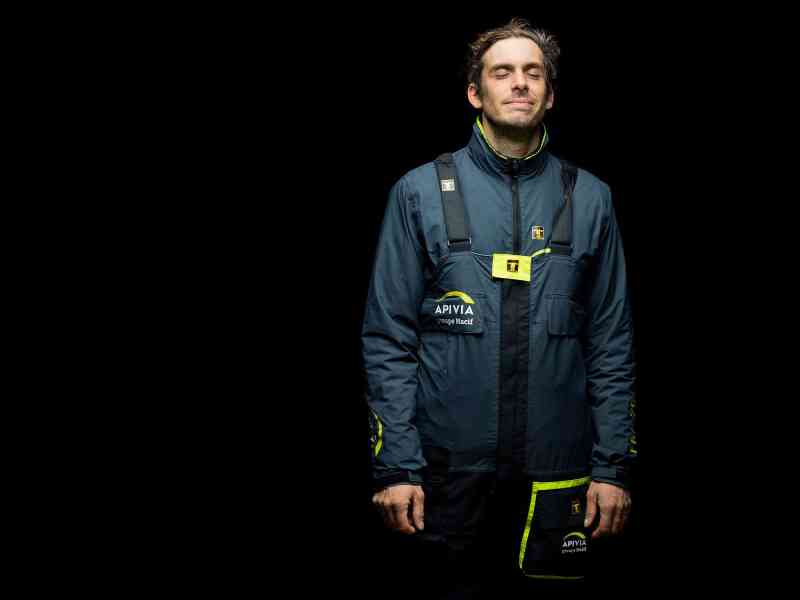
Charlie Dalin, May 10, 1984 – June 11, 2026
It’s hard to overstate French sailor Charlie Dalin’s achievement in winning the Vendée Globe solo round the world race in 2024-’25. That marathon is difficult enough to win once, let alone doing so after taking line honours four years earlier.
Dalin, who died at the age of 42 on June 11th, was in the unprecedented and unfortunate position of having finished first in the 2020-’21 race, only to be demoted to second. This came after a time allowance was given to Yannick Bestaven for helping to search for fellow French skipper Kevin Escoffier after his boat broke up in the Southern Ocean.
Dalin took this heartbreaking setback with great dignity. But the sailor, originally from Le Havre in northwest France, was determined to remove the asterisk from his name and win the thing outright. What no one knew – apart from his wife and oncologist – was that he set sail for the second time on the Vendée Globe a year after being diagnosed with the intestinal cancer that would claim his life 17 months after he finished.
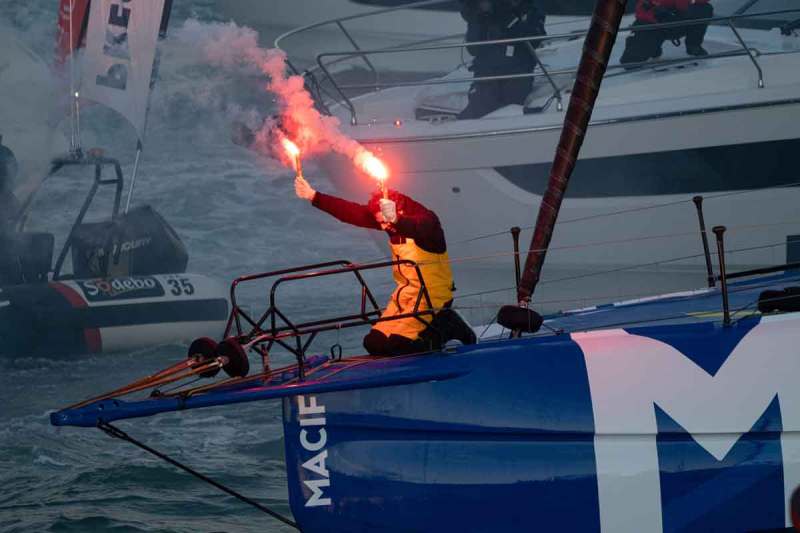
Nevertheless, it was still one of the most poignant arrivals at the French Biscay port of Les Sables d’Olonne when Dalin, on board MACIF Santé Prévoyance, returned to the cheers of thousands, as he confirmed his status as one of the greatest solo racing sailors of the modern era.
He did not reveal his battle with cancer until nine months later when his autobiography The Force of Destiny was published. But that day he told us he was the happiest man alive after a faultless voyage around the planet that saw him get the better of his old rival Yoann Richomme, the two men finishing almost a day apart. Dalin’s time – 64 days, 19 hours and 22 minutes – was an astonishing 10 days quicker than the existing record for the fastest, non-stop, solo, monohull circumnavigation of the world.
Dalin was feted for his courage when the book came out and the story of his illness became known, winning the Légion d’Honneur in France and World Sailing’s male World Sailor of the Year. Even those inside the sport, among them Vendée Gobe veterans, were stunned at his bravery, his resilience and his self-belief in taking on the toughest challenge in offshore ocean racing while contending with a disease that could kill him.
So who was he? Dalin came from a family of landlubbers as he used to joke. His father worked in the music business as a tour manager for rock bands, while his mother was a sales assistant and a bus driver. The young Dalin was raised, along with a younger sister, close to the sea at Le Havre, but only became hooked on sailing when he stayed with his grandparents in Brittany where he enrolled on a sailing course. He never looked back.
As a teenager he covered his bedroom walls with the posters of his heroes and the great races, including the Transat Jacques Vabre (now the Transat Café L’OR) that started from his hometown every four years. High school in Le Havre was followed by a degree in naval architecture at Southampton University in England, where he honed his racing skills on the Solent.
And that degree at Southampton is one of the keys to Dalin. After graduating, he developed into a highly competitive racer on the water, having set his heart on a career as a professional. But it was the combination of his racing skills with his technical mind that made him such a formidable opponent, in the complex and continuously-developing discipline of grand-prix foiling monohulls.
Shy and modest, Dalin was softly-spoken and with a dead-pan sense of humour. He was well-prepared, on top of the detail and with a sporting temperament, that allowed him to focus consistently on the goal in hand. He was exhaustively analytical and made decisions only after carefully studying his options.
After sailing initially in fully-crewed events, he moved to short-handed and solo racing, winning his first double-handed transatlantic race in 2012. Then Dalin joined the Figaro class – the proving ground for French solo skippers – where he compiled a remarkable run of five podium finishes between 2014 and 2018 without actually winning it.
In the IMOCA class, he won solo and two-handed transatlantic races during the build-ups to his two Vendée Globe appearances, and became the dominant sailor of his day, with a big following both in France and around the world. There was no doubt that, but for his illness, his glittering career had a lot further to go.
A sailor who knew Dalin well, is the Ocean Race-winning skipper of 11th Hour Racing, Charlie Enright. He last saw the French skipper 10 weeks before Dalin’s death when Dalin came to stay with Enright and his family in Newport while being treated at a hospital in Boston.
Enright had got to know Dalin when he joined his crew for Leg 5 of the 2023 Ocean Race from Newport to Aarhus in Denmark. It was during that fast and furious transatlantic crossing that Dalin suffered a serious concussion when the boat hit something in the water, almost certainly a whale.
Enright summed up Dalin as follows: “He was an amazing talent obviously. But you combine that with his level of intellect, his drive and determination and his quiet confidence. He was consistent as the day is long – a reliable and fierce competitor. Charlie was a bit of an introvert; you wouldn’t describe him as someone who lit up a room, but he carried a room because of who he was and what he’d done, and because of the respect that people had for him.”
Enright recalled what Ben Wright, the 11th Hour Racing shore team manager, remembered of Dalin, when both were part of the Ericsson Racing team in the 2008-’09 Volvo Ocean Race. “He remembers when Dalin was what he called ‘the Cad kid’, during the Ericsson campaign. He was a student of the game – he could draw it on the computer and feel it on the water.”
Enright also spoke about the competitive quality in the French skipper. “Some of what you saw on camera and in the media was natural pragmatism,” he said, “but some of it was calculated competitiveness, because he didn’t want to give anything away. And he always wanted you to think he was on it and in control…Charlie was a smart, tough cookie…”
Dalin’s death created national headlines in France and reverberated around the sailing world. It was a fitting measure of his stature and of his singular achievement in winning the last Vendée Globe.