The denser the fiberglass ceiling, the more force is needed to demolish it.
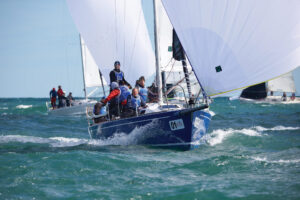
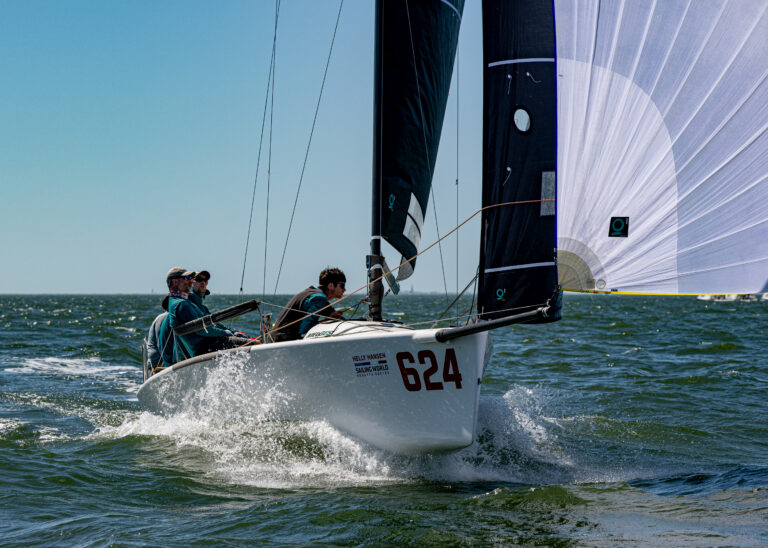
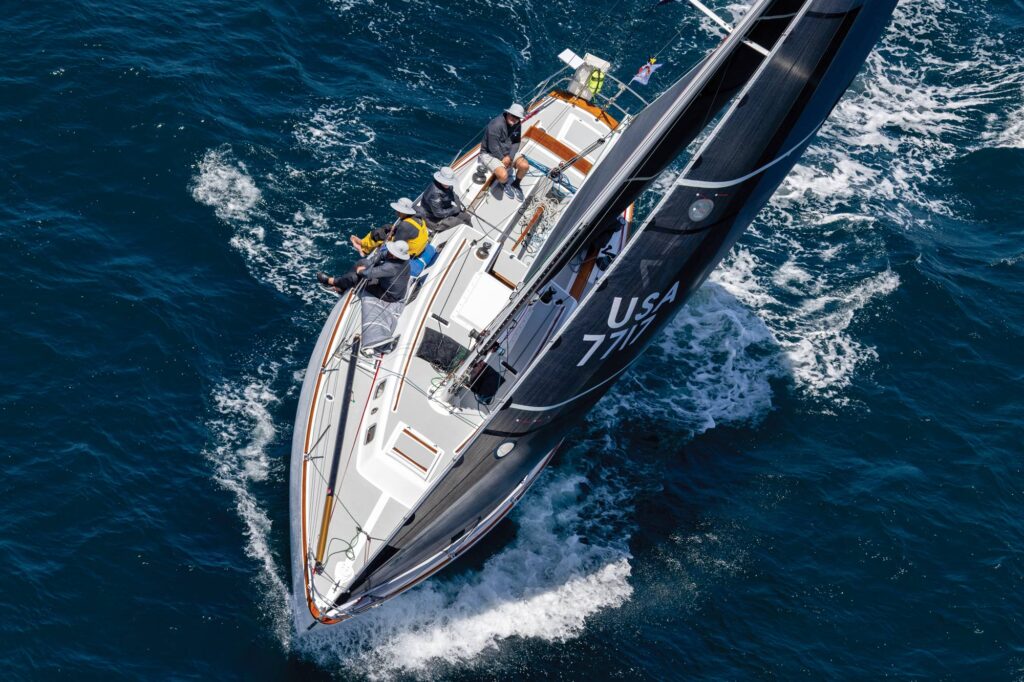
In the case of the biennial Transpacific Yacht Race (established 1906), this force had been gathering for 72 years before Alli Bell became the first woman skipper to win this 2,225-nautical-mile race aboard Restless, her Cal 40, this year.
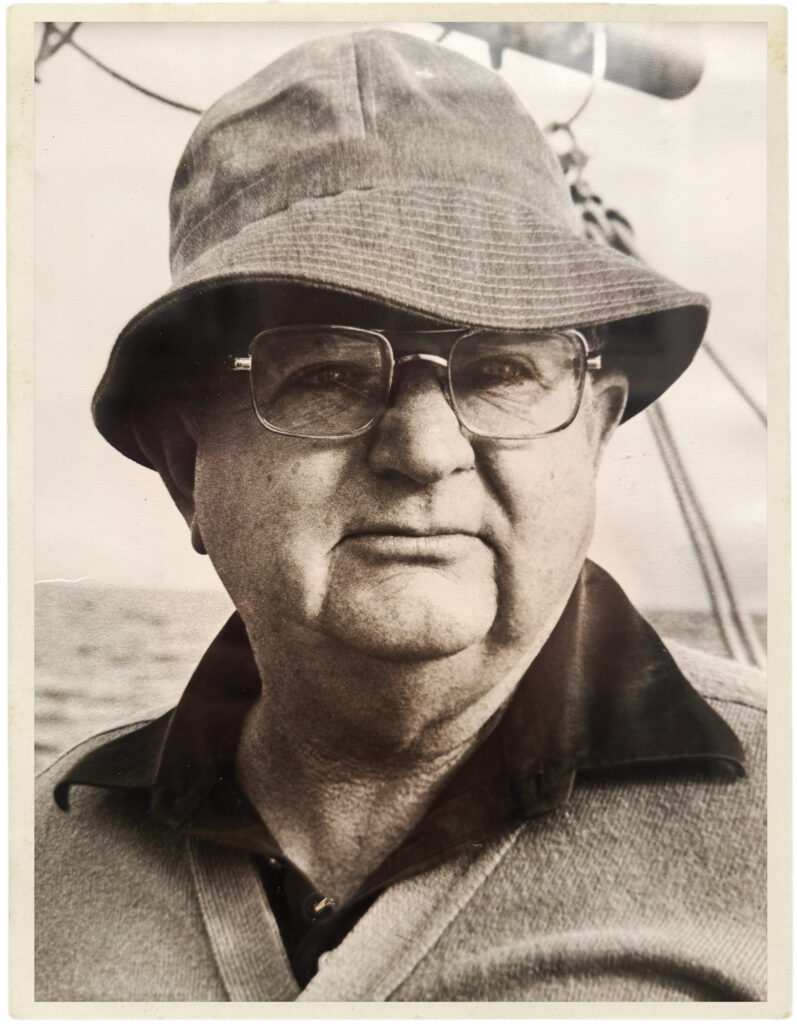
It began in 1953 when Willard Bell—Alli’s grandfather—first skippered Westward Ho, his Lyle Hess-designed 36-foot sloop, in Transpac. Bell returned in 1959 with Westward Ho and a crew that included his wife, Inez, before upgrading to Westward, his Lapworth 50, which he first raced in the 1965 Transpac alongside sons Charles (Alli’s dad) and Sam.
Over the years, Willard Bell skippered all five of his children—three boys and two girls—to Transpac’s iconic finishing line off Diamond Head aboard Westward.
“I don’t remember a time that Transpac wasn’t a big deal in my life,” Alli Bell says.
While Transpac and Westward, which is still in the family, dominate Bell family lore, Alli Bell’s lifelong dream was to own a Cal 40. “And the obvious thing to do with a Cal 40,” she says, “is to go race Transpac.”
Becoming the first woman skipper in Transpac’s 119-year history to win corrected-time honors and the King Kalakaua Trophy, however, was the result of great preparation, rock-solid leadership, outstanding crew work, and that most fickle of offshore currencies: Luck.
Plus, adds Bell, perhaps some ethereal VMG. But that’s premature storytelling.
Alli Bell’s first of five Transpacs unfurled in 2013, when uncles Sam and Willie decided that Westward needed to fetch Diamond Head again. Westward’s 2013 crew included cousins Mara, Jon, and Graham, the latter of whom navigated Restless to its 2025 win.
Westward finished the 2013 Transpac third in its class and ninth overall, notching a high-water mark for the sailing Bells.
But that’s only half of Restless’s lineage.
Enter Stephen Driscoll, Bell’s husband and a lifelong sailor with his own Transpac heritage: Clem Stose, Driscoll’s great-grandfather, won the 1928 Transpac aboard Teva, his W. Starling Burgess-designed 56-foot centerboard yawl, before earning the race’s Barn Door trophy (read: fastest elapsed time of any competing monohull) as the captain of Vileehi, H.T. Horton’s Edson B. Schock-designed 80-foot auxiliary ketch, in 1934.
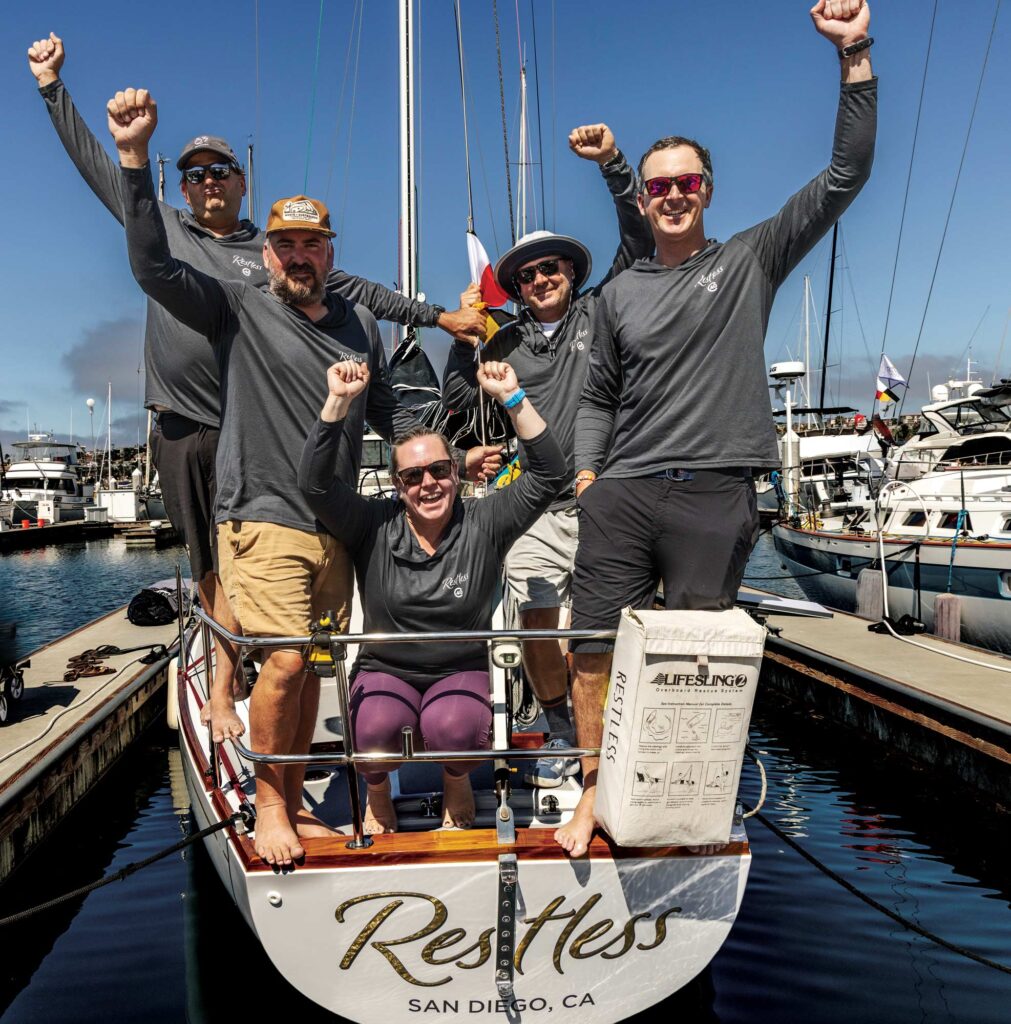
Bell, who is the Transpacific YC’s Rear Commodore and the San Diego YC’s Vice Commodore, fulfilled her first dream in 2019 when she purchased Restless, a 1967 Cal 40.
Bell’s first call was to cousin Graham, requesting his navigational services. Eric Heim (a professional sailmaker who raced off the clock), Driscoll (who was still solidifying his position with his then-girlfriend, now wife), and cousin Mara also got calls. Bell’s friend Greg Reynolds was a later recruit.
First, however, Restless needed love.
While the boat sailed the 1975 Transpac and came with solid bones, it wasn’t race ready. The hull-to-deck joint needed attention, its undercarriage had osmosis blisters, and its mast failed its survey. Moss adorned the toe rails, the cruising sails were just that, and the belowdeck spaces were dark.
“The first thing I did when I bought the boat was clean up the toe rails, which resulted in a lot of leaking because I dislodged all the caulking,” recalls Bell. “I knew I had to take it to the yard to glass over the deck-hull joint, which is a common fix on Cal 40s.”
Restless was hauled from the brine, revealing her undercarriage sores. The deck carried a railroad yard’s worth of headsail track that Bell wanted to remove for (eventual) cruises to Catalina, but which necessitated all-new non-skid. And since teak was already on order, the cockpit combing needed refreshing.
Belowdecks, Bell and company rewired everything, revamped the engine (more, later), installed a new head and plumbing, fitted a watermaker and a new stove, and revitalized all brightwork. “We did pretty much everything down below,” says Bell, explaining that Driscoll Boat Works handled the blisters, the hull-to-deck joint, the track removal, the non-skid job, and all painting.
Fortune smiled on Restless when Bell found a Cal 40 owner who was divesting his sail inventory. “He had only used the main twice,” says Bell, adding that she also purchased other racing sails from this owner.
Other sails, like the team’s heavy J1, came from an Ericson 35, while the J3 had existed in a state of uncompletion for years. Both were recut for Restless.
“It was a lot of piecing things together,” Bell says. But for the record: “Secondhand doesn’t have to mean ratty,” she says, noting that she also bought a brand-new genoa and a No. 2 spinnaker.
Restless’s used mast was gifted by Don Jesberg, a fellow Cal 40 owner who had recently outfitted his whip with a brand-new stick.
All up, Bell, who is a higher-education policy analyst, estimates that she spent somewhere in the high five figures or very low six figures preparing Restless for the 2025 Transpac, and for other cruising adventures. “I haven’t done the math,” she says. “But there’s no way it was much more than that, because I don’t have those kinds of resources.”
But it was the engine, of all things, that almost soured everything.
The team fitted a new high-output alternator, but this required sending some pulleys to a shop in eastern Canada for servicing. They were due back in SoCal in March; instead, they arrived in late May. “Another few days and we wouldn’t have been able to go,” says Bell, noting the ridiculousness of having an engine threaten a sailboat race. “The irony of that wasn’t lost.”
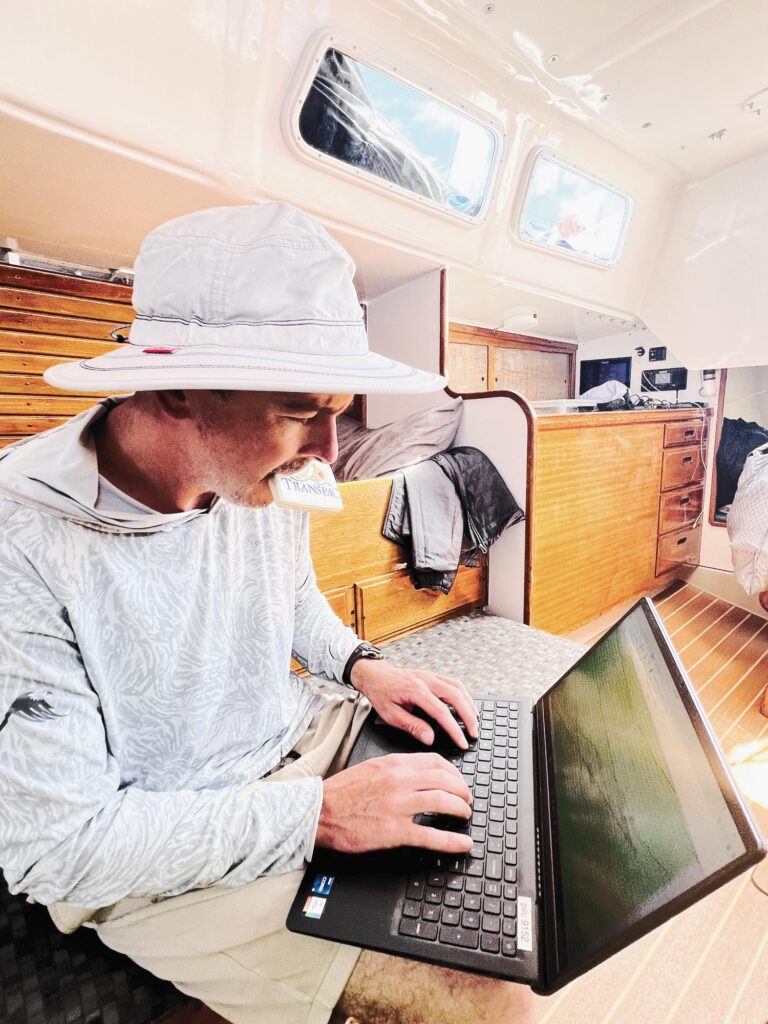
Another windshift arrived a week before the start when cousin Mara broke two ribs. Restless’s six-person crew became a five-person operation.
“We were disappointed, but we dealt with it,” says Bell, explaining that the team adjusted their watch schedule accordingly.
So how did Restless outsail 52 other starting yachts, many of which benefited from much newer hull designs, professional crews, and brand-new sail inventories?
“Luck,” says Bell. “We were lucky that the weather pattern worked out that we could just point the bow at Honolulu and go.”
Some backstory: Transpac uses a pursuit-style start, with teams starting on July 1, 3, and 5. While there’s no question that the first wave of starters enjoyed the best breeze out of the gate, the race’s Forecast Time Correction Factor scoring—which is also used in the Newport Bermuda Race—levels this playing field.
Restless’s starting date put the team to the west of an upper-level low that created an expansive area of light winds. But even so, Restless was only one of 15 monohulls that shared that meteorological good fortune.
When pressed on this latter point, two fundamental truths of offshore sailing emerged.
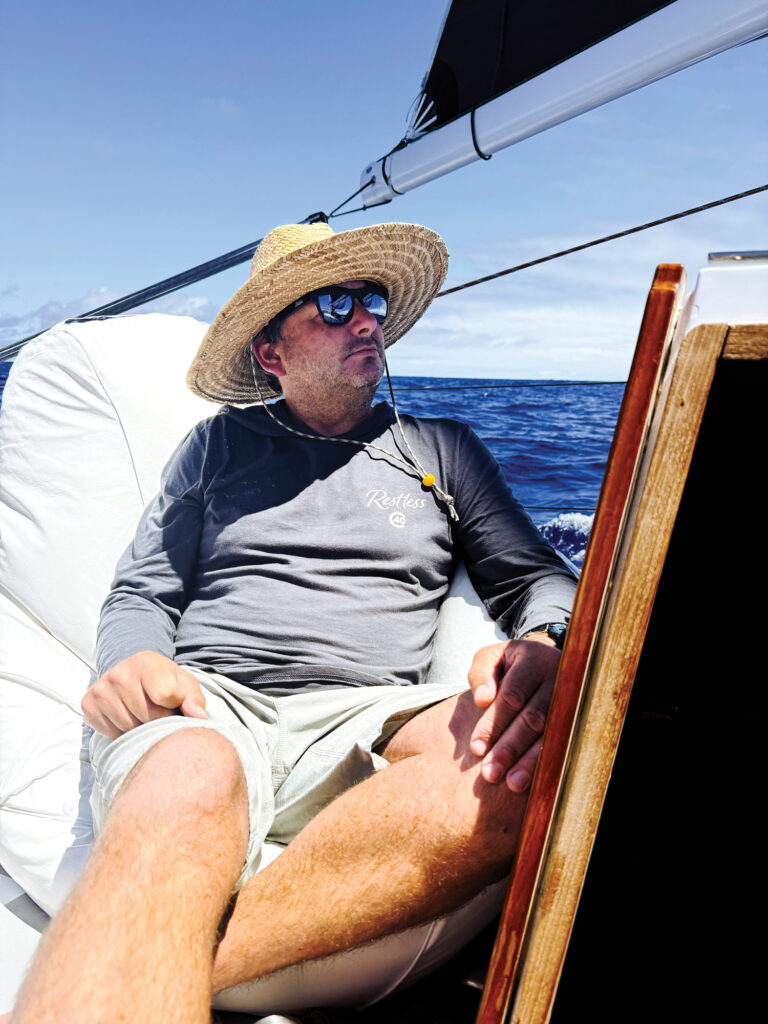
“Preparation, number one,” says Bell. “Number two, crew work.”
Still, it wasn’t all VMG running: On July 7, the team learned that Donald Wyatt, Driscoll’s uncle and a three-time Transpac veteran, had passed away.
“We got to thinking a lot about what it means to be doing what we were doing,” Bell says of retracing sea miles previously plied by family members and friends who had crossed life’s final bar. “I like to think that their spirits kept us on,” she says. “I just think there was something propelling us that was more than just the boat.”
Intervening angels aside, there’s no question that great sailing was the team’s driving force.
Sure, there was a squall with a 27-knot stinger that overwhelmed the number of wraps holding the spinnaker guy around its winch drum, but—aside from this small SNAFU—the team otherwise focused on smart navigation, fast driving, and attentive sail trimming.
Restless crossed the finishing line at 2223 on Sunday, July 13, posting an elapsed time of 12 days, 12 hours, 3 minutes, and 16 seconds. They were met at the dock by more than 100 family members, friends, and fellow competitors—by far the largest welcoming party enjoyed by any 2025 finisher.
While this boiled down to a corrected time of 8 days, 12 hours, five minutes, and 49 seconds, which put the King Kalakaua Trophy within reach, the team had to endure days of uncertainty as protests (none of which involved Restless) wended through the protest channels.

“It was a little bit nerve-racking, and it definitely set into my imposter syndrome,” recalls Bell. “You sort of wait for the other shoe to drop, right?”
Instead of shoes, 119 years’ worth of (fiber)glass ceiling tumbled when Restless was declared the overall winner.
“This should be an inspiration, and not just to women,” says Bill Guilfoyle, commodore of the Transpacific Yacht Club. “It should be an inspiration to anyone who wants to compete knowing that any boat that’s well-prepared and well-sailed has the opportunity to win this race.”
It also shows that Transpac’s future is as bright as the noonday sun so long as there are dreamers and doers keen to take on this trans-Pacific challenge. When queried about the implications of her success, Bell, in her characteristic low-key style, downplayed her achievement.
“I don’t think I’m anything special,” she says. “I’m someone who wanted to do something and did it.”
While that may be true, there’s also something to be said about those in the family who had a hand in her destiny. They’d be right proud of her commitment and preparation, and not the least bit surprised by the result.