The Dynamics of Puffs
Ever-shifting wind creates opportunities that can turn a losing race into a winning one in the blink of an eye, and vice versa.

Ever-shifting wind creates opportunities that can turn a losing race into a winning one in the blink of an eye, and vice versa.

Don’t underestimate the value of a well called puff.
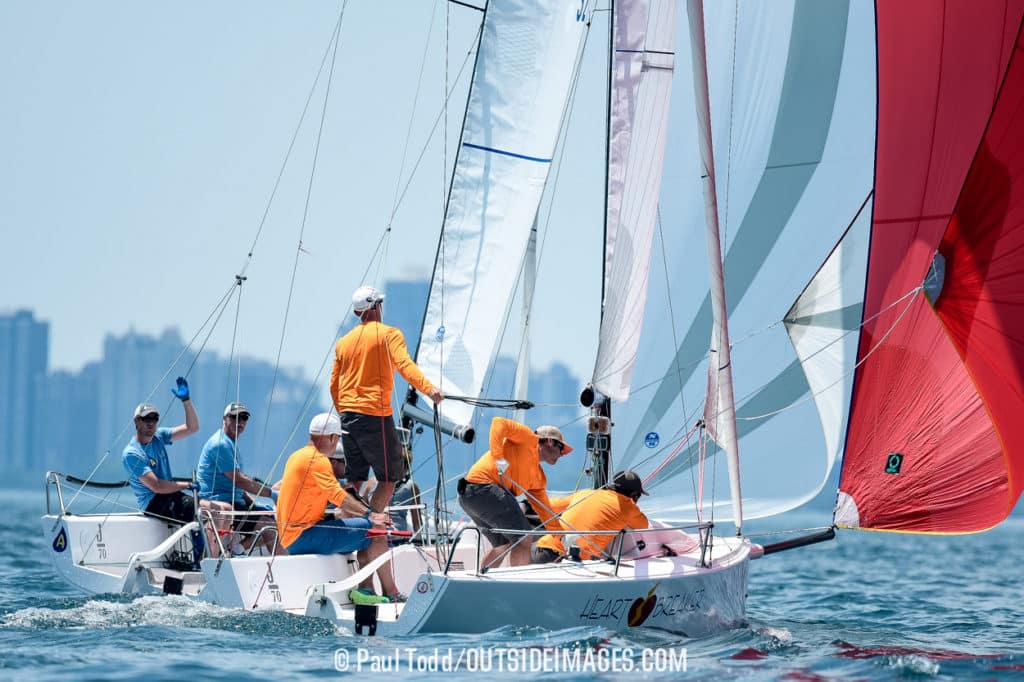
Even with the best tactical foresight, we can find ourselves in a jam, but keep these three tips in your tactical toolbox, and you’ll always have a Plan B.

With the new sailing season fast approaching, it’s time to sit down and set new benchmarks for better results. “Strategy” from our April 2011 issue.

Tim Herzog explains that holding on to a lead can be as much about your mindset as it is your speed or tactics.

Communication between boats on the course can help in tight situations, but sometimes it’s better to “shut up and sail.”

With foiling catamarans, match racing tactics still apply, but with narrow course boundaries and rapid closing speeds, tactics are accelerated to a new level.

Taking a big-picture look at the conditions will help you set up better, and make smarter small-picture decisions.
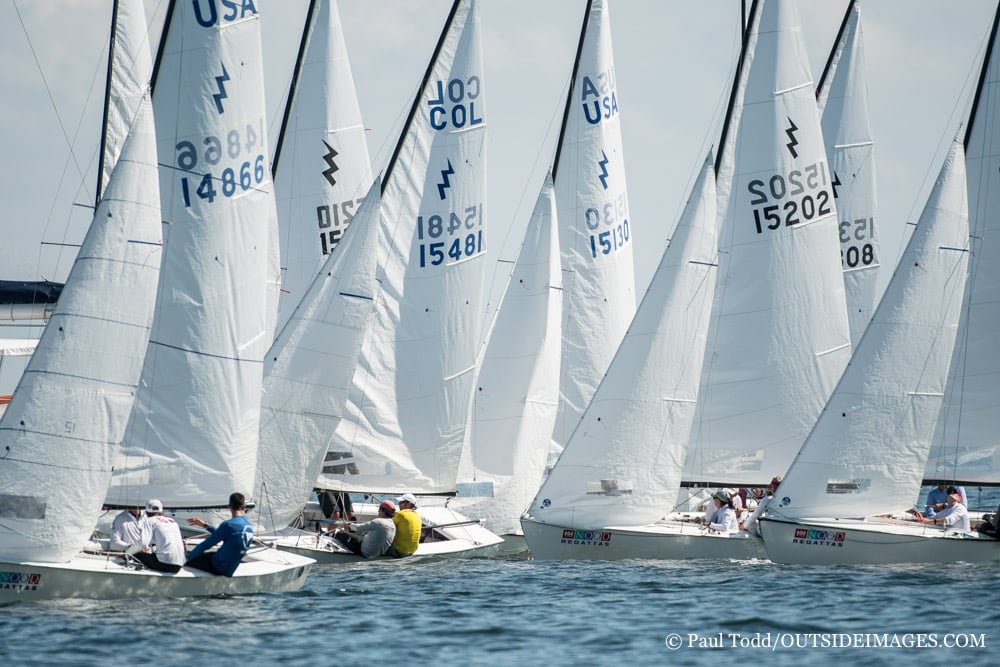
Top sailors know that time well spent before the first start will go a long way toward good finishes.

Steve Hunt applies what he learns during his pre-start workup, and makes a case for the importance of having a good plan—or at least having a plan.

In his fourth installment, Steve Hunt gives us the guide to a conservative first leg.

After sailing a smart beat, it’s time to get around the weather mark without any drama.
Ever-shifting wind creates opportunities that can turn a losing race into a winning one in the blink of an eye, and vice versa.
Don’t underestimate the value of a well called puff.
Even with the best tactical foresight, we can find ourselves in a jam, but keep these three tips in your tactical toolbox, and you’ll always have a Plan B.
With the new sailing season fast approaching, it’s time to sit down and set new benchmarks for better results. “Strategy” from our April 2011 issue.
Tim Herzog explains that holding on to a lead can be as much about your mindset as it is your speed or tactics.
Communication between boats on the course can help in tight situations, but sometimes it’s better to “shut up and sail.”
With foiling catamarans, match racing tactics still apply, but with narrow course boundaries and rapid closing speeds, tactics are accelerated to a new level.
Taking a big-picture look at the conditions will help you set up better, and make smarter small-picture decisions.
Top sailors know that time well spent before the first start will go a long way toward good finishes.
Steve Hunt applies what he learns during his pre-start workup, and makes a case for the importance of having a good plan—or at least having a plan.
In his fourth installment, Steve Hunt gives us the guide to a conservative first leg.
After sailing a smart beat, it’s time to get around the weather mark without any drama.