Winning The Sea Breeze Game
Not all sea breezes are created equal. To know which way to go, you need to know their origin.

Not all sea breezes are created equal. To know which way to go, you need to know their origin.
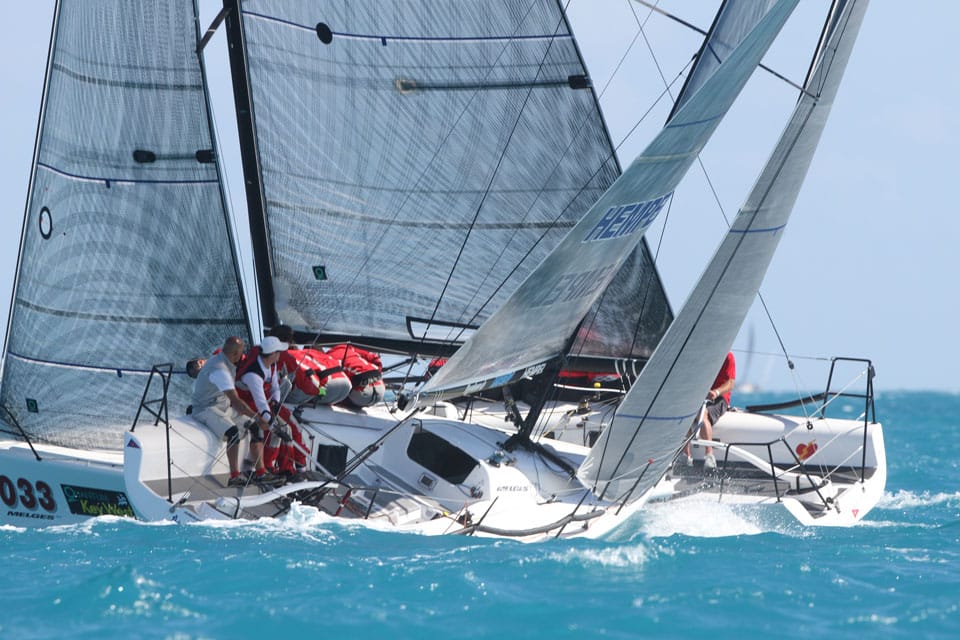
Whether you’re on port or starboard tack, the desired outcome of any crossing situation is the same: emerge in control of your destiny.

Melges 24 experts Chris Rast and Scott Nixon put together a timeline to help your team prepare for the big regatta, so you’ll be ready to hit the starting line.

Regattas are often won not by the sailor with the most great finishes, but by the sailor with the fewest bad finishes.

Knowing when to deviate from the fundamental rules of racing makes for more accurate tactical decisions and greater success on the racecourse.

If you sail by the numbers more than by the seat of your pants, then the calibration of your instruments is critical. Here’s how to ensure that your numbers are always reliable.

To understand what your instruments are really telling you, it’s important to first understand what the wind is doing and how it’s affecting your boat.
You’re only as good as your last improvement, and when it comes to winning a world championship, that means drawing upon past experiences.

When the team hasn’t sailed together in a while, there’s an easy way to get everyone on the same page and going fast.

Different experts have different opinions about how wind flows over a near-shore racecourse. Find a full list of reference materials below. From our October 2013 issue.

The racecourse is no place for a dysfunctional-decision-making.

A course change usually comes at the worse time possible: while you’re rounding a mark in a pile up. But that whistle and Code Flag Charlie will have the info you need to make a move and get ahead, according to Terry Hutchinson. You just have to be ready for it.
Not all sea breezes are created equal. To know which way to go, you need to know their origin.
Whether you’re on port or starboard tack, the desired outcome of any crossing situation is the same: emerge in control of your destiny.
Melges 24 experts Chris Rast and Scott Nixon put together a timeline to help your team prepare for the big regatta, so you’ll be ready to hit the starting line.
Regattas are often won not by the sailor with the most great finishes, but by the sailor with the fewest bad finishes.
Knowing when to deviate from the fundamental rules of racing makes for more accurate tactical decisions and greater success on the racecourse.
If you sail by the numbers more than by the seat of your pants, then the calibration of your instruments is critical. Here’s how to ensure that your numbers are always reliable.
To understand what your instruments are really telling you, it’s important to first understand what the wind is doing and how it’s affecting your boat.
You’re only as good as your last improvement, and when it comes to winning a world championship, that means drawing upon past experiences.
When the team hasn’t sailed together in a while, there’s an easy way to get everyone on the same page and going fast.
Different experts have different opinions about how wind flows over a near-shore racecourse. Find a full list of reference materials below. From our October 2013 issue.
The racecourse is no place for a dysfunctional-decision-making.
A course change usually comes at the worse time possible: while you’re rounding a mark in a pile up. But that whistle and Code Flag Charlie will have the info you need to make a move and get ahead, according to Terry Hutchinson. You just have to be ready for it.