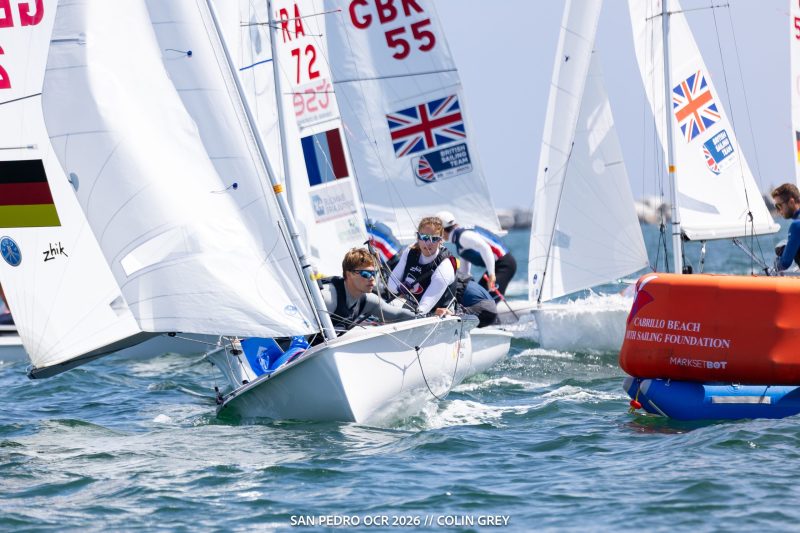
Six days of racing at the home of the L.A. 2028 Olympics closed for the ILCA 6, ILCA 7, and 470 classes last week, with Great Britain’s Hannah Snellgrove, Australia’s Matt Wearn, and Brits Martin Wrigley and Bettine Harris taking the top spots in their fleets. With a new Final Series format that included 2 short high-intensity races for each class, San Pedro OCR concluded with tightly contested battles on the waters outside the Port of Los Angeles.
In the 470, Wrigley and Harris held onto their multi-day lead to claim gold for Great Britain, followed by Germany’s Simon Diesch and Anna Markfort with silver and Sweden’s Anton Dahlberg and Lovisa Lindner with bronze. Wrigley and Harris opened the Finals with a bang, winning the first race of the day outright.
“It was quite exciting,” said Wrigley. “It wasn’t so straightforward in all of the races. There were some pressure differences across the courses which made it more interesting than maybe you might have thought.”
For the British pair, the day provided another opportunity to learn the venue, from the challenge of judging the layline on long upwind legs to navigating differences in conditions in the week’s 3 separate racing areas, especially the outside course.
“I think the whole world probably knows to go right, but it was just figuring out exactly how that paid out,” said Harris.
In ILCA 6, American Charlotte Rose and Ireland’s Eve McMahon entered the final day in third and fourth, respectively after a difficult Thursday, while Dutch sailor Maxime Van De Werken-Jonker had surged into second overall after putting together two of her strongest races of the regatta.
In the hard-fought medal race sprint, McMahon climbed her way back into the top three, winning bronze, with Rose also jumping up a spot to take silver. Hannah Snellgrove held onto the overall lead to earn gold, revealing that the victory was especially meaningful to her.
“Some wins mean more than others,” the 2024 Olympian shared. “It’s special to win on Olympic waters two years out from the Games, but this one is particularly emotional for me as it’s my first time back racing since losing my dad a few weeks ago. This gold medal is for him.”
Snellgrove started the week in third before falling to seventh on the second day of racing, ultimately grinding her way back up the leaderboard with inspired finish after inspired finish.
In ILCA 7, Australia’s Matt Wearn sealed the overall win after a week-long battle at the top of the fleet. Cyprus’ Pavlos Kontides took silver.
“It feels good to be winning at the Olympic venue,” said Wearn. “It’s a nice way to kick things off.”
Great Britain’s Micky Beckett, who closed the week with a bullet to secure his place on the podium in third, said that sailing in the L.A. Harbor offered up an important chance to begin scouting the subtleties in conditions that will play out when sailors return to San Pedro for the Olympic Games.
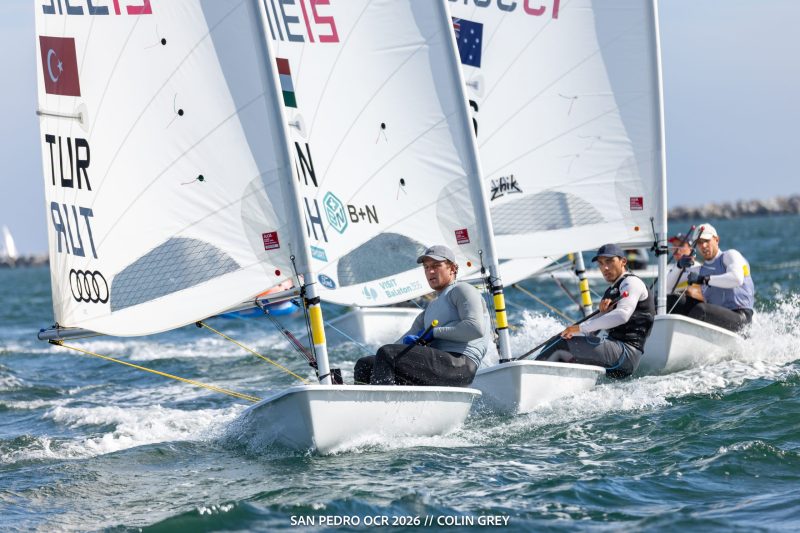
“The aim is always to go away having a good idea of what you need to practice,” said the Olympian and San Pedro OCR bronze medalist. “We’re not turning up here with everything perfect, but we are trying to go away with a rough idea that in our own time and over the European winter, we can have a crack at getting better at whatever is required to do well in these conditions.”
The week featured a number of standout moments, among them Nitai Hasson and Noga Tiano’s port start from the pin end on the first race of Day 5 in the 470 class. With jibs flogging everywhere less than a minute from the start, the Israeli pair tightened their sails on the right side of the start line and made a dash for the pin on starboard. Hauling flat out astern the full fleet, Hasson and Tiano tacked at the starting horn and ripped across the line, clearing 44 boats to win the start.
“I was trying to bring some action into the fleet,” said Hasson. “It was awesome,” added Tiano.
In ILCA 6, Great Britain’s Matilda Nicholls produced one of the regatta’s most stunning comebacks, also on the fifth day of racing. After finishing Day 4 in 14th and seemingly outside points range for the Final Series, Nicholls vaulted herself back from elimination to earn her place among the top 10 for the final day.
The week also highlighted the complexity of the future Olympic venue. Sailors experienced everything from light and shifty conditions inside the break water to stronger sea breezes and challenging swells on the outside track, reinforcing the value of gathering knowledge at the venue 2 years before the Games.
For Wrigley and Harris, who had already spent several weeks training in San Pedro before the regatta, the opportunity to race against an international fleet provided another layer of preparation.
“We’re here for a couple of weeks already, so yeah, we feel like we’re finding our feet here and getting comfortable,” said Harris.
Ireland’s Finn Lynch, who finished seventh in ILCA 7, said that after spending much of the week near the podium, the experience was an early step toward defining what a winning run at L.A. 2028 will require.
“When we debrief this summer and get all of our minds together, we’ll create a blueprint of what a gold medal performance will look like in 2028 and what we need to be able to nail,” Lynch said. “Then we can work backward from that.”
Great Britain’s Beckett, leaning into his experience at the 2024 Games, iterated that mastering the venue is going to be about more than simply identifying the favored side of the course. Honing the finer points, he said, is what will ultimately make the difference.
“The basics are easy. It’s the details that are hard and difficult to do well,” Beckett said.
As the boat park empties out to make way for the next event’s competitors, ILCA and 470 sailors packed up their gear, but they’re also taking home important intel that will guide their training for the next 2 years of preparation for the 2028 Olympics.
“It’s been really cool to finally experience the conditions this place has to offer,” Wrigley smiled. “The Olympic cycle feels real now.”
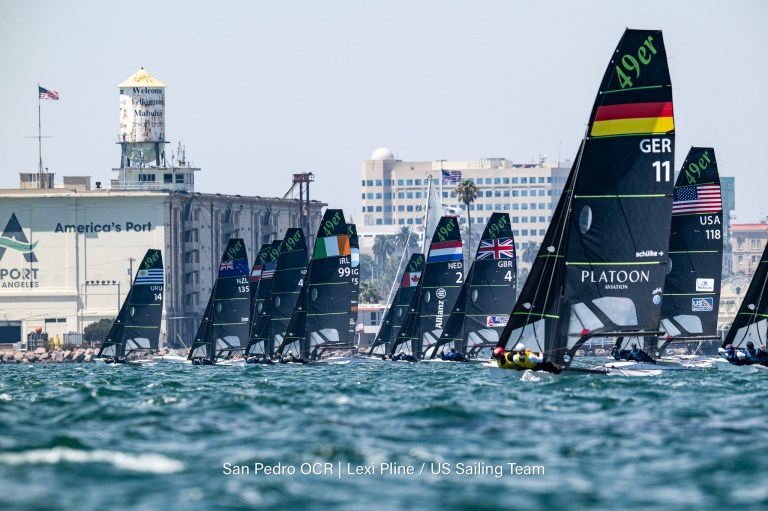
Racing at the future Olympic venue continues in August, when the second half of the San Pedro OCR brings the 49er, 49er FX, and Nacra 17 classes to L.A. during the first week of the month. The next phase will bring another field of Olympic athletes to the venue, and with them, the chance to test the waters and build their knowledge of the L.A. 2028 racecourse.
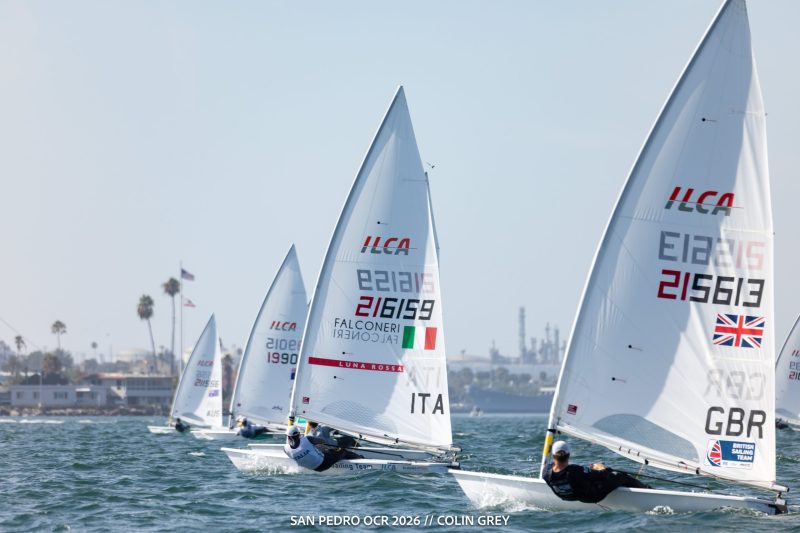
San Pedro OCR is one of only two major Olympic Class events that take place in the United States. More than 400 sailors from 47 countries in 6 Olympic classes are racing at San Pedro OCR during the 12-day event in the L.A. Harbor in July and August. Among the contenders are more than 70 Olympians, including 6 winners of a collective 22 Olympic medals – 3 gold, 12 silver, and 7 bronze.
Racing for the 49er, 49er FX, and Nacra 17 classes runs from August 3 to 8.