Coaches
Thirty years ago, the only places you’d ever see sailing coaches were in junior clubhouses, college boathouses, and sailing schools. I know from years of experience that coaching is effective, which is why, for the past decade there’s been a tremendous growth in the use of coaching. It’s mostly happening at opposite ends of the sport’s spectrum: competitive youth sailing and the Olympics. The bulk of amateur sailors—from one-design to club-racing PHRF teams—have yet to catch on.
Competitive sports such as tennis and golf thrive on teaching professionals and coaches. They’re fundamental to their sports. Sailing pros should be just as integral to ours. Lessons can take place on an individual boat, or with an entire fleet sharing the expense and learning together. Many sailors spend freely on sails, boats, equipment, and professional crew, but miss the opportunity to really improve by having someone else evaluate their performance. Self-analysis is always difficult, and a coach that joins a team and watches from off the boat can offer insight you can’t get any other way.
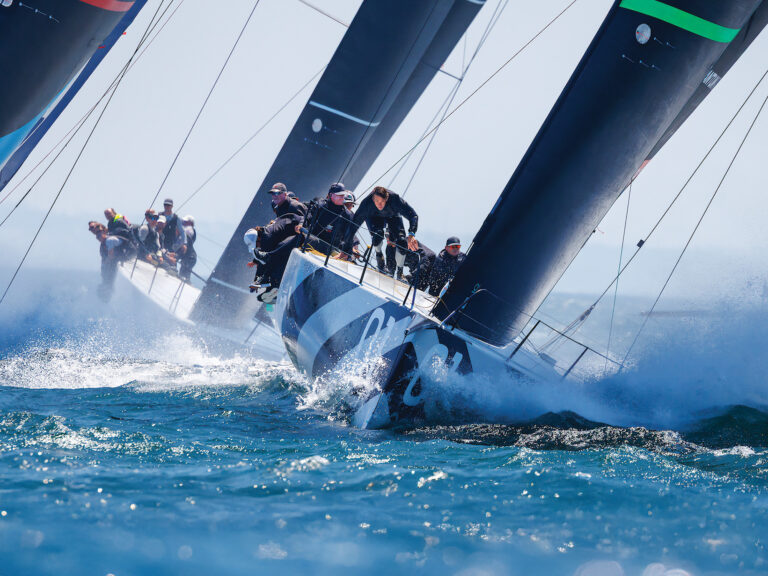
There has to be a balance though. Coaching is now standard in a few one-design classes, especially grand-prix classes, and it’s here where excessive coaching creates tension. This is where the “haves-and-have-nots” issue comes to a head. With coaching to be encouraged, class managers must regulate it with the class’s longevity in mind.
“I have no problem with classes that try to regulate coaching, just the way they regulate sail inventories, class rules, and pro sailors,” says Dave Perry, a veteran coach and educator who advocates using a coach at events. “People enjoy doing things that are fun for them, and when they feel they are growing more competent they participate more.”
Improving at any endeavor takes dedication. Practice, learning from experience, and having the courage to improve are basics to success in any sport. A coach can shorten the timetable: they can be used on a short-term basis for remedial work. I do this in skiing. A two-hour lesson helps me get more out of my ski vacation week.
“I think there is real value in having the coach see the performance of their sailors and competitors,” says Perry. “The debriefs and follow-up instruction will be more insightful than simply relying on the sailor to report what happened.”
Perry’s right. Coaches can be helpful, particularly for sailors who want to engage deeper into the sport. Occasional is one thing. Excessiveness is another, however. And this is what we’re seeing at the serious youth level, where only a few have coaches, and everyone else must fend for themselves.
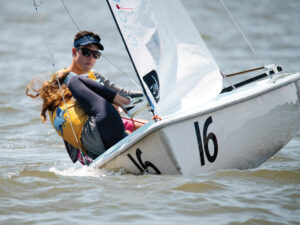
One way to ensure a beneficial balance is to require youth coaches to assist all sailors at practices and events. Pointing out to others what they see in other sailors will only make their sailors stronger. When interacting with these young sailors, it’s critical that coaches ask questions, and encourage them to answer these questions. Having them come up with their own solutions only helps them clarify techniques and procedures for themselves.
Good coaches are careful to not push young sailors too hard, aware that overkill could result in them rejecting sailing. Novice racers are better off if they learn by doing themselves. Looking back on my own career, my father did me a favor by saying, “Good bye,” when I got on the boat. I did not see him until I returned home after a full day of racing. His first question was always the same, “What did you learn today?” Followed by, “Did you have a good time?” And, finally, “What’s next?” I wouldn’t be sailing today if it weren’t for his hands-off approach.
“Education is the essential purpose of junior sailing programs,” says Perry. “I tell parents that their job is to ‘support’ and the coach’s job is to ‘develop’ sailors. When parents try to develop their kids into better athletes, it usually goes south quickly.”
I once observed a coach struggling with a group of parents who arrived with their aspiring sailors and then rigged the boats for the kids, gave lectures on winning, and yelled from the dock. I could see the rejection in those kids’ faces, plain as day.
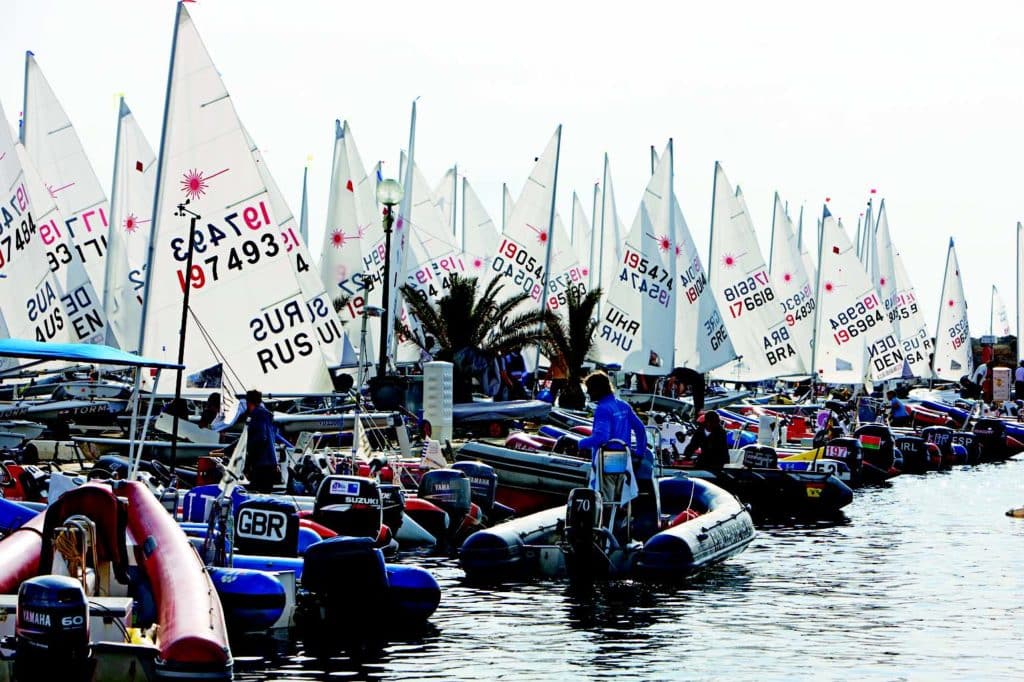
Another unfortunate side effect to the growth of coaching is the extraordinary number of coach boats on the water at regattas. This is true at Optimist Dinghy events all the way to Olympic class regattas. Sailing is supposed to be a “green” sport, and having dozens (sometimes hundreds) of coach boats buzzing around the course does little to lessen our environmental impact.
Coach boats, however, can be very helpful to event organizers by serving as safety boats. Before an event, top race officer Tom Duggan will hold a short meeting with coaches to set the ground rules so no one interferes with the racers. He also asks them to monitor a specific channel in case help is needed on the racecourse during an emergency.
In the past few months, Olympic sailors, event organizers, and administrators have voiced opinions that the coach boat population is becoming a problem. Thirty year ago, support and coach boats were almost non-existent at Olympic-class regattas. Today there are often more coach and committee boats than competitors, and from my perspective filming events from helicopters, I can attest to the dramatic effect powerboat wakes have on a fleet of racing dinghies. It’s time to address this issue by limiting the number of coaches allowed into the venues. Coaches should also be required to watch from designated coach boats that fit many people. This would eliminate the dozens of small craft buzzing around the course, level the playing field, and reduce team costs.
At the Olympic level, most sailors use coaches, and multiple coaches at that. Not many years ago this was rare, but this is the nature of Olympic competition today. Coaches are a critical part of the team. There are many logistical tasks they assume, and act as psychologists, speed specialists, or mentors. Sailors improve the fastest when they are able to maximize their time on the water, and both sailors and their coaches must be careful that creativity during a race is not lost. As depicted in the film “Chariots of Fire,” for example, the gold medalist in the l00-meter dash trained with a coach for months leading up to the Games, but on race day the runner was on his own and won. The coach realized there was nothing more he could do; come race time it was all up to the athlete. I wonder how the dynamics of the Olympic regatta would change if sailing coaches could only watch from ashore.
If there’s one niche of our sport that seems to have a healthy coaching environment, it’s college sailing. Beyond the junior level, collegiate coaching has evolved and improved over the years. I’ve attended the college national championships the past six years and have been amazed watching the coaches in action. They have the right balance. I have noticed coaches helping rival teams with protests or logistics when that team does not have its own coach.
The collegiate protocol requires that all coaches watch from the same vantage point. Fairness is the key. I also like the way these professionals work with their sailors by asking questions and offering only a few tips at a time. In fact, the college competitors actually seem to coach each other in between races during boat rotations. It makes for a nice atmosphere at regattas and everyone has the potential to return home a better sailor.
Sailors can benefit from a coach. This is true for business leaders who take courses or hire consultants for guidance and, of course, for athletes at all levels. But if taken to an extreme a pampered sailor will not have the skills to perform consistently at a high level. The key is to balance the use of outside help with letting the sailors make their own decisions. In the end, they will be stronger.