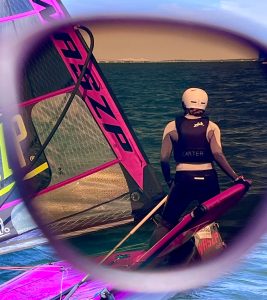
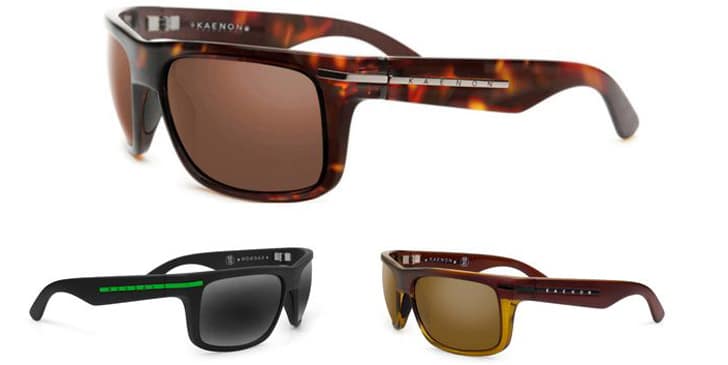
When I finally broke down, agreeing to ditch my cheap, generic sunglasses for the real deal, all I knew was that they should be polarized and filter out all ultraviolet rays. I avoided the meticulous thought process that should go into buying quality eyewear and quickly selected a pair, deeming them “good enough.” Acura Key West Race Week was rapidly approaching, and so as long as my new shades protected my eyes and let me spot puffs on the water, I was a happy camper. But my eyes have since been opened to the abundance of choices available in colored lenses. It’s a choice that’s more important than you may think. Lens color is a key factor to the sunglass-wearing experience; the amount and types of details the wearer sees on the water vary with each hue.
“Color perception varies from person to person,” says Oakley’s Andy McSorley. “It is solely opinion-based.” Nonetheless, he adds, specific colored lenses do perform better in certain conditions.
Let’s start with grey, a neutral color and good, all-purpose lens tint. “Grey is the most universal,” says Steve Rosenberg, of Kaenon Polarized. “It does a great job overall.”
Grey lenses block the sun’s brightest rays without altering one’s color perception, giving the wearer a darker version of what he or she would see with the naked eye, or the most natural view. Many people, says McSorley, prefer grey lenses for days with intense sunlight because, despite identical light transmission rates, they believe grey lenses to be darker than colored lenses, which induce a color shift and make reds and greens stand out.
Of all the light waves interacting with our eyes, those at the blue end of the light spectrum are most powerful. Cones in the eye’s retina read color, and it’s the blue light that dominates our vision, washing out our perception of other colors. Minimizing this blue light and enhancing other colors, such as red and green, is said to improve visual acuity.
“Blue light can limit the eye’s ability to focus, creating chromatic aberration or blurriness, especially in aquatic and snowy environments where blue light is prevalent,” says Colin Smith, of Rēvo.
“Because light waves are at their most powerful within the visible blue portion of the spectrum, the most noticeable effects on visual contrast occur by modifying visible blue light transmission,” says McSorley. In order to knock down blue light, however, there must be a color shift. If the wearer doesn’t mind an altered view of the world, there are many different lenses that highlight specific colors and diminish others, which is extremely effective in variable- to low-light conditions.
Copper, amber, or bronze lenses are ideal for variable light conditions because the contrast created by the lens heightens visibility. “Contrast works by highlighting color and separating light from shadows,” says Rosenberg. “It defines slight details in tonal colors, such as the water’s surface, which is otherwise one color. Breeze and wave height versus little wind and flat water create darker or lighter water surfaces.”
Such contrast, adds Rosenberg, determines how sailors see breeze velocity and direction, as well as current. Because of the color shift, and the wearer’s ability to distinguish distant details easily, copper lenses work well in an environment with dark or grey water. They are also very easy on the eyes, as they don’t cause a lasting color distortion.
Yellow is another lens color used to enhance contrast and block blue light. Yellow is ideal for reading details in overcast, low-light conditions. Yellow lenses excel in a mid-range level of darkness because of the higher light transmission rate, says Rosenberg. It’s the “sweet spot” for those sailors who require and want specific and extreme contrast. Being able to cut through the atmospheric haze allows the user to better see puffs fanning across the water’s surface.
Blue lenses, too, provide many rewards. If you don’t want color shift, choose sunglasses with a neutral, grey base and blue mirror coating. Mirror coatings reduce glare and help alter out specific spectrums of light. “Because the mirror is blue,” says McSorley, “the blue light is specifically reflected away from the eye. Eyewear like this would work well in the Caribbean, which is continuously dominated by a bright blue hue.”
For variable-light conditions, a few manufacturers recommend sunglasses with a blue mirror to divert the blue light and a copper base tint to enhance contrast and augment details on the surface of the water.
Although different colors perform better in different light conditions, the experts insist that ultimately there is no right or wrong decision when it comes to colored lenses.
“Tints do have a scientific attribute, but each of us is different,” says Rosenberg. “We have different eye colors, different light sensitivity levels, and we do indeed see things differently.”
Lens tint is a personal choice based on light conditions and the type of information the user wants, adds Rosenberg. “More contrast isn’t always best; it’s a personal choice,” he says. “This is the trend we see with the best sailors: grey tends to be a favorite of the more intuitive, seat-of-the-pants sailors, and contrast-enhancing colored lenses tend to be favored by the more analytical.”
There’s no right lens tint for everyone: personal choice is the determining factor, but the manufacturers have their recommendations:
- Grey: Good all-purpose use with no color distortion
- Copper: Ideal for variable light and dark or grey water
- Yellow: Perfect for low-light, overcast conditions
- Blue: (Mirrored lens with grey base tint) Good for blue-dominant conditions, such as the Caribbean
- Red: Heightens contrast in variable conditions, causes color imbalances
How Much Light to Let In?
With polarized sunglasses comes a range of light transmission rates, meaning, how much light permeates the lens and reaches your eyes. In bright light, a lower transmission rate is desirable: this means less light is getting to your eye. In low-light conditions, a higher transmission rate is better. sunglass manufacturers categorize their light transmission rates in percentages or numbers: Intense, bright sun: 9 to 12 percent; sunny to variable light conditions: 13 to 30 percent; low-light, hazy, overcast conditions: 31 to 55.
Sunglass Care, On-the-Go
If you don’t have a proper sunglass cloth on hand, one of the best ways to clean glasses quickly is to breath on them or get them wet with water (not saltwater before wiping them gently with a soft cloth. You should not use paper products (toilet paper, napkin, or paper towel as these are highly abrasive and scratch the lens coating. also, when saltwater dries on a lens, use soap and water and before wiping to avoid scratching the lens surface and coatings. For a more thorough cleaning, you should routinely wash your glasses. Start by cleaning the nose pads and then rinsing the glasses under warm water to remove dirt and surface residue. then, apply a small amount of mild detergent to your clean fingers and gently move the soap across the lenses in a circular motion. Finally, rinse the glasses again under warm water; if they are really clean, the lenses will repel water, so all that you need to do is dry the frames with a soft cotton cloth.