collisions 368
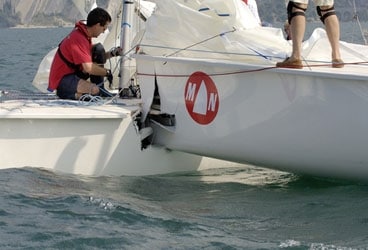
There have been several recentincidents during races that have resulted either in injury to crewmembers or serious damage to boats. These have been so serious that lawyers have been engaged, lawsuits filed, and the cases are working their way through lengthy and expensive legal processes.
Fortunately, such cases are rare in our sport. However, it is fairly common for boat damage to be sufficiently extensive such that insurance claims must be made and, as a result, insurance companies must figure out who will ultimately pay for the repairs. A lawyer handling a suit involving serious damage sent me a useful guide published by the Canadian Yachting Association Racing Rules Committee. This guide gives competitors and owners a step-by-step road map to follow to settle a claim for damages.
The plural noun “damages” is a term used by the legal community and is defined as “a sum of money claimed or awarded in compensation for injury or loss.” Rule 68 states that “damages arising from a breach of any rule shall be governed by the prescriptions, if any, of the national authority.” The Canadian guide was, of course, based on the Canadian prescription to Rule 68, which differs from the US SAILING prescription to that rule.
In this article, and in a subsequent column, I will present a similar guide for U.S. sailors. This draws heavily on suggestions in the Canadian guide, but it differs in several important ways as a result of the differences between the US SAILING and Canadian prescriptions.
The most important piece of advice in the Canadian guide is equally applicable in the United States. That is, if your boat is damaged or anyone aboard is injured, you should protest the boat that collided with your boat or caused any injury. Indeed, you should protest even if the other boat admits that she broke a rule and even if she takes a Two-Turns Penalty (or the Scoring Penalty or some other penalty made applicable by a sailing instruction) or retires from the race.
There are several reasons for protesting. The most important is that you will obtain an interpretation of how the rules apply to the incident from a protest committee selected for its familiarity with and knowledge of the rules and of the interpretations of them in the ISAF cases and US SAILING appeals. If you do not protest, you will have to rely on insurance companies, lawyers, or a judge in a court of law to interpret the racing rules. They usually know the laws well, but it’s rare to find one that has even a passing knowledge of the racing rules of sailing. Secondly, the protest committee follows “due process” procedures-the parties have the right to be notified of the hearing’s time and place, to review the allegations made in the written protest, to take time to prepare for the hearing, to be present while testimony is gathered and arguments made, to present their evidence and that of their witnesses, to cross-examine one another and witnesses, to be judged by persons who are not interested parties, to state their own views about how the rules apply to the incident, and to a receive a written copy of the decision (Rules 63.2, 63.3, 63.4, 63.6 and 65.2 and Appendix M).
Lastly, the sailors on the protest committee are far more likely than insurance or legal experts to be familiar with the conditions in which the incident occurred and to know how the boats involved handle in such conditions. Also, the hearing is usually held the same day as the race while memories are fresh and witnesses are readily available. There is no charge for the hearing (Rule 61.4), and if the protest committee makes an error in applying the rules or significant new evidence becomes available after the hearing, you have the right to seek redress or request a reopening of the hearing (Rules 62.1(a) and 66). What’s more, after you receive the written protest decision, if you believe the protest committee incorrectly applied the rules, or did not follow the required procedures, you usually can appeal the decision or the procedures, but not the facts found (Rule 70.1), and you may be entitled to appeal the decision of the first appeals committee that considers your appeal (Appendix F).
In order to receive a written application of the rules you must first follow the procedure for a protest. If a member of your crew is injured, or your boat is seriously damaged, you are likely to be totally involved in important activities-such as obtaining medical help or protecting your boat from further damage. Therefore, delegate a crewmember to handle protest details. That person should immediately: hail “Protest” to the other boat or boats involved in the incident, fly a red flag if your boat’s hull length is 6 meters or more, and identify possible witnesses to the incident who might testify during the protest hearing. Also, comply with any additional special requirements for a protest in the sailing instructions, such as a requirement to inform the race committee by hail or radio that you intend to protest. After returning to shore, write up the protest and deliver it to the race office before the end of protest time (Rules 61.2 and 61.3). These rules are less onerous than they might initially appear. The protest need not be written on an official protest form (unless the sailing instructions require it), and it need only list the boats involved and “identify the incident, including where and when it occurred.” A brief statement is sufficient. For example: “Demon on port tack collided with us while we were on starboard tack rounding the weather mark for the first time in Saturday’s second race.” Also, if you deliver your protest after the end of protest time, the protest committee is required to extend protest time if you had a “good reason” for being late. Certainly, helping an injured person or protecting your boat from further damage is a good reason.
There is additional latitude granted in the rules when an incident involves damage or injury. If the damage or injury “is obvious to the boats involved,” then the requirements to hail and fly a red flag are waived, and you need only “attempt to inform the other boat” and deliver the written protest before the end of protest time (Rule 61.1(a)(3)). Alternatively, if there is injury or “serious damage” you can simply inform a member of the protest committee verbally and ask that the committee protest the boats that collided under Rule 60.3(a)(1). If it agrees to do so, then-without your having to take any of the steps listed above-there will be a protest hearing on the incident.
If the boat you’re protesting admits that she broke a rule or has taken a penalty under Rule 44.1, or retired after finishing, some protest committees may refuse to hear your protest because Rule 44.4(b) states that they cannot penalize the protestee further. Even in this situation the committee must hear your protest because Rule 63.1’s last sentence requires the protest committee is to “hear all protests . . . that have been delivered to the race office unless it allows a protest . . . to be withdrawn,” and no rule requires a boat to withdraw a protest.
In order to preserve your right to appeal, when the protest committee informs you verbally of its decision, deliver a one-sentence written note to the committee stating simply, “I request a written copy of the facts found, the decision, and the reasons for it.” (See Rule 65.2)
After the hearing, if you believe the decision was “improper,” request redress under Rule 62.1(a). If you believe the committee made a “significant error” or significant new evidence becomes available, within 24 hours of being informed of the decision, request under Rule 66 that the hearing be reopened. Finally, within 15 days of receiving the committee’s written decision, you may send an appeal to the US SAILING office. An appeals committee is required to send you its decision in writing (Rule 71.4).
Next month I’ll address how the insurance and legal communities should use the written decision from the protest or appeals committee to resolve your claim for damages.
E-mail for Dick Rose may be sent to rules@sailingworld.com